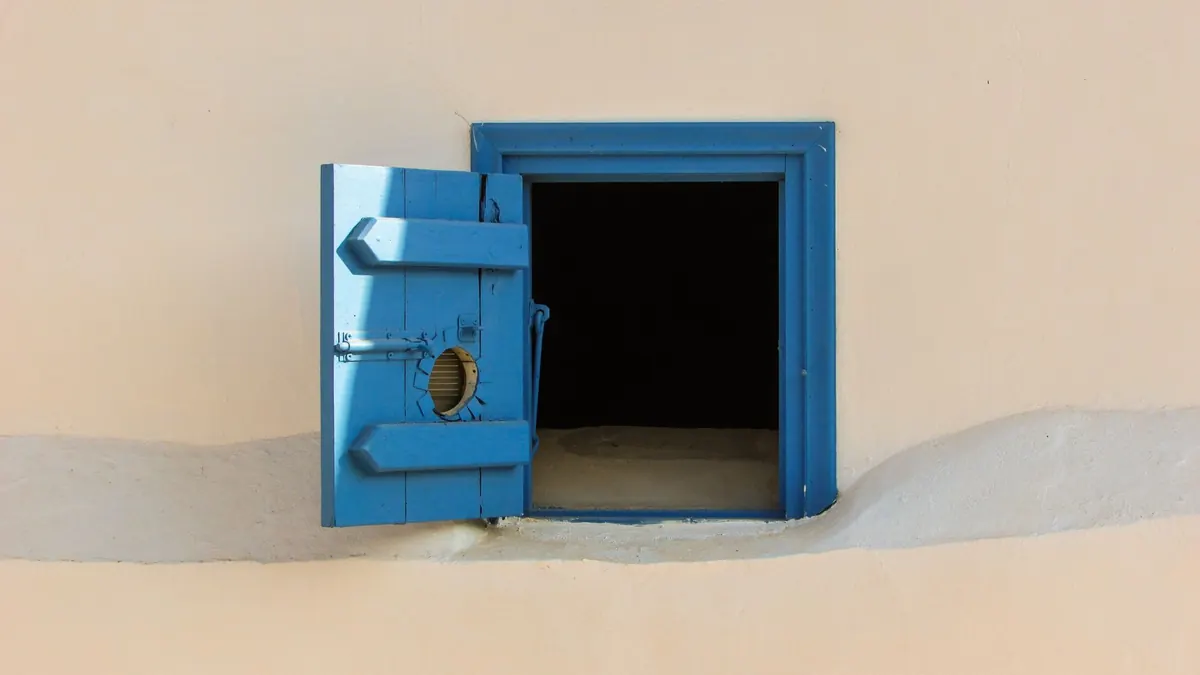
Two windows sit side by side in a showroom, both with a crank handle at the bottom. One swings its sash out from the side; the other pushes out from the top. The difference looks small on a display stand and feels enormous in a real room, on a wet Tuesday, with a sofa two feet away and a kitchen counter underneath. Here is what actually separates these two very common window types, and how to decide which one belongs where.
Two Hinges, Two Very Different Behaviours
A casement window is hinged along one vertical edge. Turn the crank (or release the handle, depending on the model) and the whole sash swings outward from the side, like a door opening away from you. In North America and the UK this is usually an outward-opening sash on a crank operator; in much of continental Europe the same window often opens inward, frequently as a tilt-and-turn.
An awning window is hinged along its top edge. The bottom of the sash pushes outward and up, so the glass forms a small canopy over the opening. Picture a car hood lifting, or a lid propped open from below. The crank sits at the sill, the hinges sit high, and the sash travels a much shorter distance for the same amount of ventilation.
That single geometric difference — side hinge versus top hinge — governs everything that follows: airflow direction, rain behaviour, where you can put furniture, and how much of the glass you can reach with a cloth.
Ventilation: Volume Versus Direction
A casement gives you the largest clear opening of any operable window of the same width. Opened fully, the sash stands perpendicular to the wall and the room exchanges air fast. That makes casements excellent for a quick evening purge in a bedroom that has been closed all day, or for a living room that heats up in late afternoon.
There is a side effect worth knowing. A wide-open casement catches wind like a sail. On an exposed wall it can bang against the frame or strain the hinges in a gust. Fit a friction stay or a restrictor arm so the sash can be held at 30 or 45 degrees, and use the full swing only when you are in the room.
An awning behaves differently. The angled sash deflects incoming air upward toward the ceiling, so the draft lands above head height and spreads across the room instead of hitting you at desk level. Sit beside an open awning window and you will feel air movement without a cold stream on your neck. The trade-off is that an awning lets in less air per window than a casement — useful for background ventilation, less useful when you want to clear a hot room in ten minutes.
Rain Protection Is Not a Tie
This is where awning windows win clearly. Because the sash hinges at the top, it acts as a hood. Rain running down the outside glass reaches the bottom edge of the sash and drips off there, well clear of the opening. You can leave an awning cracked open two or three inches during a summer shower and come back to a dry sill.
A casement has no such protection. The open sash faces sideways, so wind-driven rain blows straight into the gap, and rain running down the glass follows the sash inward. On a coast, a hilltop, or any wall that takes the prevailing weather, an unprotected outward casement will wet the sill and the floor beneath it.
The practical rule: put awnings on the weather side of the house, where rain and wind arrive together, and put casements on sheltered or leeward walls where you want maximum air. If you want casements on an exposed wall anyway, look for a model with a deep sill and good drainage, and close them when the wind turns.
Furniture Clearance, Inside and Out
Outward-opening windows of either type keep the floor of the room free, which is why both are popular above kitchen counters and behind sofas. But there are details that catch people out.
- Inward-opening casements need floor space. If you choose a European-style inward sash, allow a clear zone roughly the width and depth of the sash. Radiators, curtains, desk chairs and tall planters all become obstacles.
- Casements need clearance to the side, outside. Do not place one where the sash swings across a path, a balcony rail, a stairwell or the top of a garden wall where someone could walk into it.
- Awnings need clearance below and in front. The projecting sash sits at head height on ground floors, so keep it away from a doorway or a walkway where people pass close to the wall.
- Handle height matters more than you think. An awning crank sits at the sill, a casement crank around mid-height. Over a deep kitchen sink or a windowsill used as a shelf, the awning's low crank is simply easier to reach.
One more point for bedrooms and basements: a casement provides a taller, wider clear opening than an awning of the same frame size, which matters if the window is part of an escape route. Check the specific requirements for your area with your builder or local authority before you order.
Cleaning and Maintenance Access
Both types beat sliding or double-hung windows on cleaning, because in both cases the screen sits on the inside and lifts out in seconds. With the screen removed and the sash open, an adult standing inside can reach most of the exterior glass.
The awkward strip differs. On a casement, the glass nearest the hinge stays close to the frame even when the window is wide open. On an awning, the top of the sash is the far point, and reaching it means leaning out over the opening — fine on a ground floor, less appealing three storeys up. If the window sits above a counter or a bath, plan on a long-handled squeegee either way.
A few habits keep both types working for decades:
- Spray the crank operator and hinges with a silicone-based lubricant once a year, not a sticky general-purpose oil that attracts grit.
- Clear the weep holes in the sill with a pin or a piece of stiff wire. Blocked drainage causes more sill damage than rain ever does.
- Wipe the gasket with a damp cloth and check that it still springs back. Replace it when it flattens or cracks.
- Test the restrictor or friction stay by hand. If the sash drops on its own, the hardware needs adjusting before a gust finds it.
Which Suits Which Room
Most rooms have an obvious answer once you picture how the window will be used:
- Above a kitchen sink: awning. The low crank clears the faucet, and the upward airflow keeps the counter dry.
- In a bathroom, especially over a tub: awning. It stays open in the rain and gives privacy while venting steam.
- In a home office with a desk against the wall: awning, for draft-free air at shoulder height.
- In a bedroom that needs a fast airing: casement, fitted with a restrictor on upper floors.
- In a living room behind a sofa: either, provided an inward casement has room to swing.
- On a windy, rain-driven wall: awning, without question.
A Short Checklist Before You Order
Two questions settle most of these decisions. First: which way does the weather come from on that wall? If wind and rain arrive together, choose the awning. Second: what sits in front of the window, inside and out? A sofa, a counter, a path, a balcony rail — each one narrows the choice quickly.
Then check the small things while you are still in the showroom: the crank position relative to your counter height, whether the screen is easy to lift out, and whether the restrictor is included or an extra. Ask to see the window open and close. Ten seconds with the handle tells you more than any photograph, and it is the part you will live with every day.
Photo: Pixabay / Pexels