Change one dimension in a window and the landscape outside rearranges itself. Widen the opening by half a metre and a valley becomes a panorama; drop the sill by forty centimetres and a strip of lawn you never looked at rises into the room. Nothing outside has moved. What changed is the crop — the proportions of the aperture, the height of the sill, and the position of the bars that cut across it. Anyone choosing windows for a house with a view is really deciding how much of that view to keep, and where to point it.
Proportion decides what the view is about
A window is a cropping tool, and its proportions set the subject. A wide, low opening leans on the horizon: the eye travels sideways, takes in the whole sweep at once, and reads the outside as landscape. This is why long horizontal glazing suits lakes, fields, distant ridges and open water so well. The horizon becomes the spine of the composition, and everything else — a jetty, a line of poplars, a moored boat — arranges itself along it.
A tall, narrow window does the opposite. It cannot hold a horizon, so it holds fragments instead: a branch, a rooftop, a slice of sky, the top of a church tower. Vertical openings feel more like a viewfinder than a panorama, and they reward a specific subject placed on axis. Two tall windows side by side, separated by a decent pier of wall, give you two separate pictures rather than one wide one — useful when the view is good in one direction and merely tolerable in the other.
Ratios worth knowing
- Roughly 1:1.4 — the calm, classically proportioned opening. Neutral enough for almost any view, and easy to furnish around.
- Roughly 1:1.6 — slightly more generous; reads as landscape without becoming a letterbox.
- 1:2 or wider — a genuine panorama window. Superb for open views, unforgiving of clutter outside.
- Square — contemplative and centring. It flattens the horizon and throws emphasis onto one object.
Proportion is also relative. A window that feels generous in a small room can feel mean in a large one, because what we judge is the ratio of glass to wall, not the glass alone.
Sill height decides whether you see the sky or the street
If you only adjust one thing, adjust this. The sill height is the single most powerful control over what a window delivers, because it sets the bottom edge of the picture.
Low sills, roughly 300–500 mm
At this height the view includes the ground immediately outside — grass, paving, water, a terrace, the reflection in a pond. Foreground enters the composition, which makes the outside feel continuous with the room. Fabulous for gardens and water; awkward if the near ground is a car park, a bin store or a neighbour's air-conditioning units.
Waist and desk heights, roughly 900–1100 mm
The common default. The bottom of the view lifts clear of the near ground, so you get middle distance and sky: rooftops, tree canopies, hills, the far side of a street. You lose the foreground, and with it a little of the sense of connection. It is also the height that lets a desk, a counter or a window seat sit comfortably against the glass.
High sills, 1200 mm and above
The view becomes horizon and sky, which is exactly right above a kitchen run, in a bathroom, or wherever privacy matters and the ground outside is not worth looking at. Above roughly 1500 mm you have a clerestory: sky, treetops, the tops of buildings, and nothing else. Beautiful in the right place, deeply frustrating if you wanted to watch the garden.
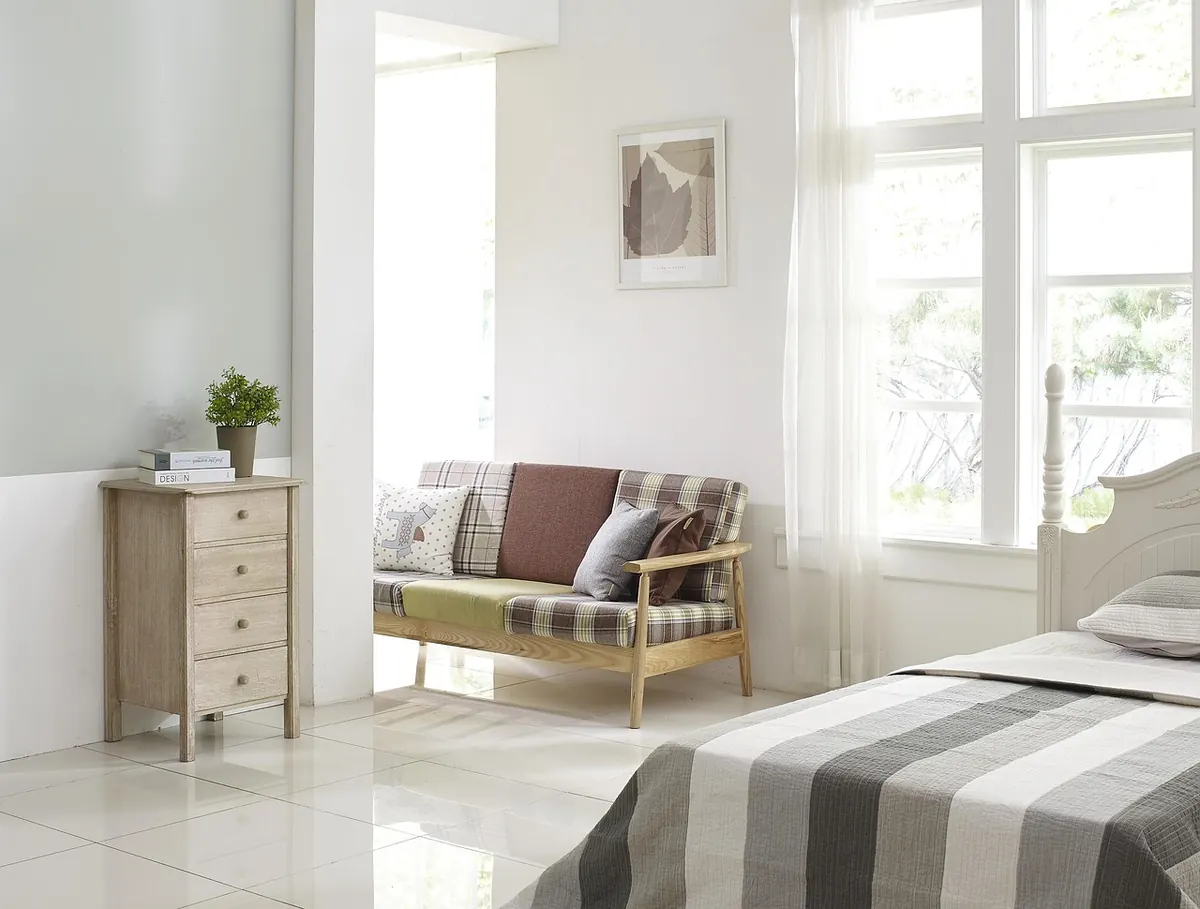
Two anchors help. A standing adult's eye sits around 1.6 m above the floor; a seated eye around 1.2 m. Check every proposed sill against those numbers, and ask honestly whether you will mostly be standing at this window or sitting beside it. A sill at 950 mm works for someone standing; for someone in an armchair it crops the view in half.
Mullions and transoms: where the eye stops
Bars do not just hold glass. They punctuate the view, and the eye reads them as punctuation.
A single vertical mullion placed dead centre splits a landscape down the middle — occasionally deliberate and satisfying, if it aligns with a path, an avenue or a symmetrical façade, and usually fatal otherwise. Moving that same bar off-centre, to roughly a third of the width, turns the window into a composition with a wide view and a narrow one. Line the bar up with something real outside, a tree trunk or a lamp post or the edge of a neighbouring roof, and it almost disappears.
Several evenly spaced verticals turn a panorama into a series of portraits. That can be handsome — a rhythm of tall openings across a façade, each with its own framed fragment — but it stops the eye from sweeping. If the view is the point, fewer bars are better.
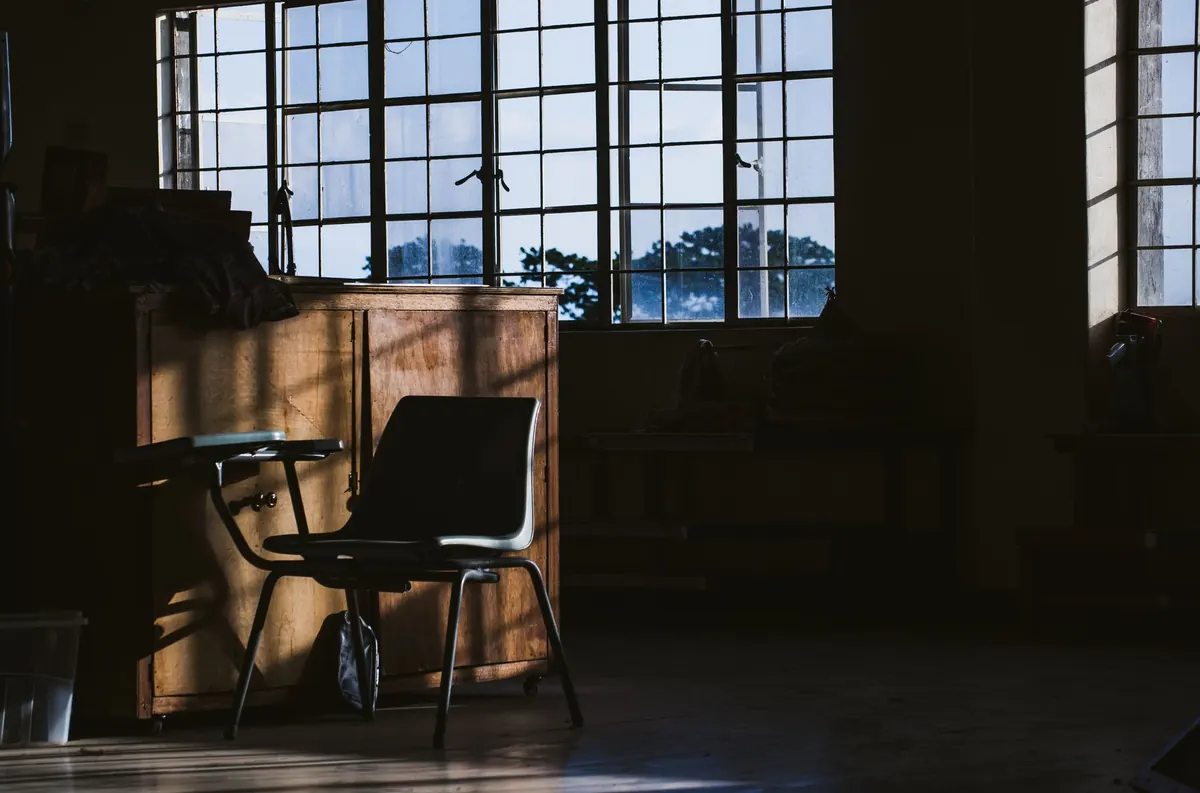
The transom, the horizontal bar, is the one that causes most regret. A transom at 2.1 m sits close to the horizon in many upstairs rooms, which means it competes with it, and two horizons in one window is one too many. Either keep the transom comfortably above the horizon line so the main pane gives an uninterrupted band, or drop it below to frame a band of sky. A slim steel section of 30 mm almost vanishes against a bright sky; a chunky 80 mm timber bar announces itself from across the room.
Also check how the window opens. A side-hung casement swinging inward will park itself right where you want to stand and look, and a large outward-opening sash can obscure a third of the view. Sliding and tilt-and-turn mechanisms leave the aperture clearer.
Depth, reveals and the edges of the picture
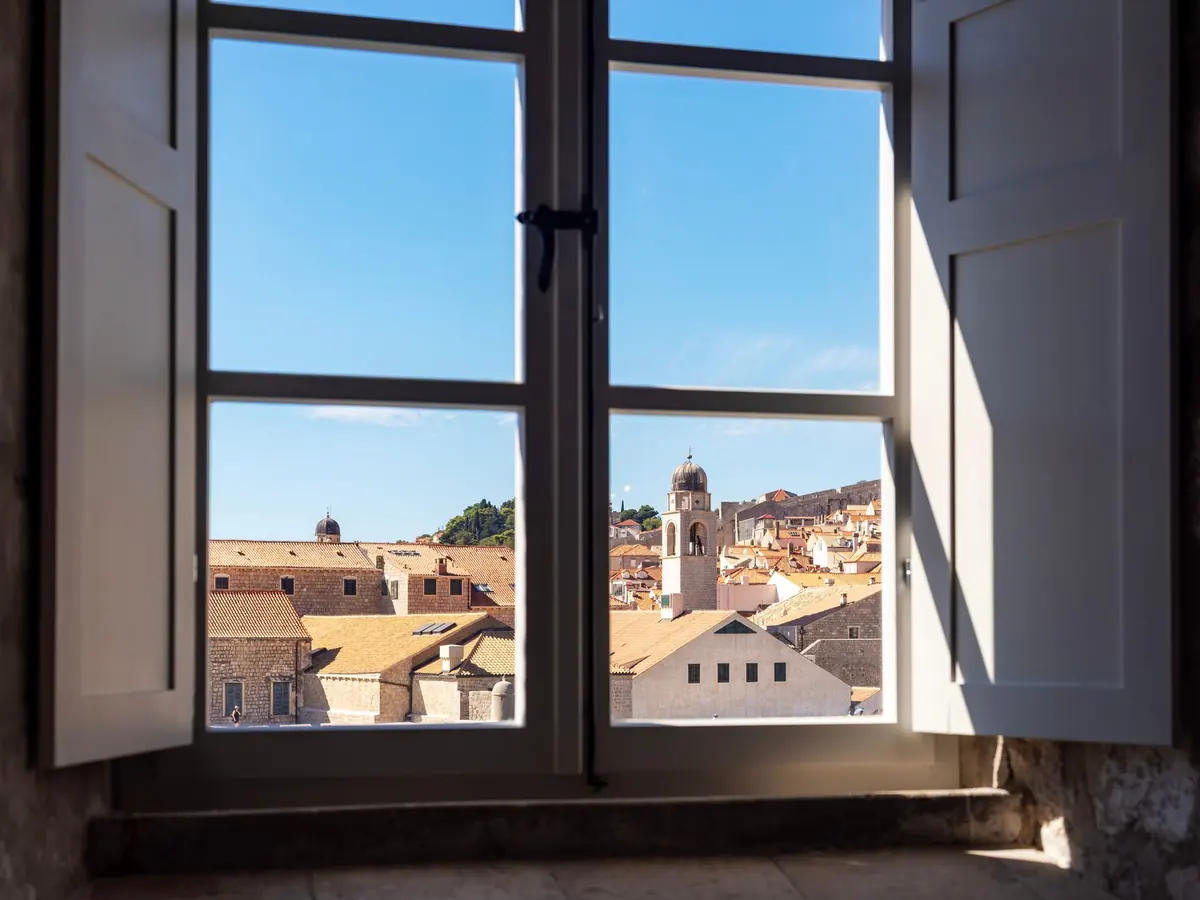
A thick wall gives you a deep reveal, and a deep reveal behaves like the mount around a photograph: it shades the edges, darkens the perimeter, and makes the outside look brighter and more saturated by contrast. It also narrows the cone of view, so you see less to the sides and more of what is directly ahead. Splayed reveals, angled outward, widen that cone considerably — a useful trick where the wall is thick and the view is wide. Sitting close to the glass widens the view further; standing back lets the window read as a single, composed image. As a rough guide, a window about as wide as the distance you sit from it gives a cone of view of around 50 degrees, which feels natural, like a photograph viewed from a comfortable distance.
Framing out what you would rather not see
Not every view deserves to be maximised. If the outlook includes a service yard, a blank gable or a row of bins, the frame is your editing tool. Raise the sill until the offending element drops below the bottom edge. Move a mullion to mask a fixed obstruction. Use a narrower, taller opening so that only the good part — the sky, a single tree — is in the picture. It is perfectly reasonable to design a window around what it excludes.
Test the frame before you commit
None of this needs to be decided on paper. Mock it up first.
- Mark the proposed opening on the wall with low-tack tape at both sill height and head height, then stand back and look at the crop.
- Take a photo from inside, with the camera at standing eye height and again at seated eye height. Compare the two.
- Cut a cardboard template of the proposed proportions and hold it at arm's length against the actual opening.
- Visit the site at different times of day and, if you can, in a different season — bare branches reveal views that summer leaves will close.
- Sketch in the furniture. A sofa, a radiator or a kitchen counter will quietly lower your effective sill.
A short checklist for choosing the frame
- Name the view's subject in one sentence: a horizon, a tree, a rooftop, the sky. Design the opening to hold that subject.
- Fix the sill height against eye level — standing or seated, whichever you will do more of.
- Choose proportions next, then decide whether bars help or hinder the composition.
- Keep transoms clear of the horizon; align verticals with real features outside.
- Mock it up full size, check the opening direction, and only then order.
Get those five things right and the window stops being a hole in a wall. It becomes a considered frame — one that shows the landscape you actually have, at the scale and in the proportions that suit it.
Photo: Bob Jenkin / Pexels